Nápady 164+ Atom Quantum Energy
Nápady 164+ Atom Quantum Energy. The quantum of energy is the smallest amount of energy that can exist in nature. Because they have opposite electrical charges, electrons are attracted to the nucleus of the atom. The amount of energy in a photon is given by the planck equation e=hf, but the frequencies that can be observed in nature are limited to discrete values.

Nejchladnější The Electron In A Hydrogen Atom Initially In A State Of Quantum Number N1 Makes A Transition To A State Whose Excitation Energy With Respect To The Ground State Is 10 2 Ev
The first quantum number describes the electron shell, or energy level, of an atom. Because they have opposite electrical charges, electrons are attracted to the nucleus of the atom. Schrödinger's equation, , can be solved to yield a series of wave function , each of which is associated with an electron binding energy,. The quantum of energy is the smallest amount of energy that can exist in nature. Since some frequencies cannot exist, some energy levels cannot occur.The value of n ranges from 1 to the shell containing the outermost electron of that atom.
Energy (n), angular momentum (ℓ), magnetic moment (m ℓ), and spin (m s). Since some frequencies cannot exist, some energy levels cannot occur. The amount of energy in a photon is given by the planck equation e=hf, but the frequencies that can be observed in nature are limited to discrete values. Erwin schrödinger proposed the quantum mechanical model of the atom, which treats electrons as matter waves. Energy must therefore be absorbed to excite an electron from an orbital in which the electron is close to the nucleus (n = 1) into an orbital in which it is further from the nucleus (n = 2). Because they have opposite electrical charges, electrons are attracted to the nucleus of the atom. Schrödinger's equation, , can be solved to yield a series of wave function , each of which is associated with an electron binding energy,.

Because they have opposite electrical charges, electrons are attracted to the nucleus of the atom.. The quantum of energy is the smallest amount of energy that can exist in nature. Schrödinger's equation, , can be solved to yield a series of wave function , each of which is associated with an electron binding energy,. The principal quantum number therefore indirectly describes the energy of an orbital. Erwin schrödinger proposed the quantum mechanical model of the atom, which treats electrons as matter waves. Energy (n), angular momentum (ℓ), magnetic moment (m ℓ), and spin (m s). Energy must therefore be absorbed to excite an electron from an orbital in which the electron is close to the nucleus (n = 1) into an orbital in which it is further from the nucleus (n = 2). The first quantum number describes the electron shell, or energy level, of an atom. Since some frequencies cannot exist, some energy levels cannot occur... Energy must therefore be absorbed to excite an electron from an orbital in which the electron is close to the nucleus (n = 1) into an orbital in which it is further from the nucleus (n = 2).

Since some frequencies cannot exist, some energy levels cannot occur. Since some frequencies cannot exist, some energy levels cannot occur. To completely describe an electron in an atom, four quantum numbers are needed: Schrödinger's equation, , can be solved to yield a series of wave function , each of which is associated with an electron binding energy,. Because they have opposite electrical charges, electrons are attracted to the nucleus of the atom. The first quantum number describes the electron shell, or energy level, of an atom. Energy must therefore be absorbed to excite an electron from an orbital in which the electron is close to the nucleus (n = 1) into an orbital in which it is further from the nucleus (n = 2). The amount of energy in a photon is given by the planck equation e=hf, but the frequencies that can be observed in nature are limited to discrete values. Energy (n), angular momentum (ℓ), magnetic moment (m ℓ), and spin (m s). The first quantum number describes the electron shell, or energy level, of an atom.

The amount of energy in a photon is given by the planck equation e=hf, but the frequencies that can be observed in nature are limited to discrete values. Erwin schrödinger proposed the quantum mechanical model of the atom, which treats electrons as matter waves. Energy must therefore be absorbed to excite an electron from an orbital in which the electron is close to the nucleus (n = 1) into an orbital in which it is further from the nucleus (n = 2). To completely describe an electron in an atom, four quantum numbers are needed: Energy (n), angular momentum (ℓ), magnetic moment (m ℓ), and spin (m s). The value of n ranges from 1 to the shell containing the outermost electron of that atom. The amount of energy in a photon is given by the planck equation e=hf, but the frequencies that can be observed in nature are limited to discrete values. The first quantum number describes the electron shell, or energy level, of an atom. Schrödinger's equation, , can be solved to yield a series of wave function , each of which is associated with an electron binding energy,. The quantum of energy is the smallest amount of energy that can exist in nature... Because they have opposite electrical charges, electrons are attracted to the nucleus of the atom.

Since some frequencies cannot exist, some energy levels cannot occur. The quantum of energy is the smallest amount of energy that can exist in nature. Since some frequencies cannot exist, some energy levels cannot occur. To completely describe an electron in an atom, four quantum numbers are needed: Erwin schrödinger proposed the quantum mechanical model of the atom, which treats electrons as matter waves. Energy (n), angular momentum (ℓ), magnetic moment (m ℓ), and spin (m s). Because they have opposite electrical charges, electrons are attracted to the nucleus of the atom. The first quantum number describes the electron shell, or energy level, of an atom. The amount of energy in a photon is given by the planck equation e=hf, but the frequencies that can be observed in nature are limited to discrete values.

Erwin schrödinger proposed the quantum mechanical model of the atom, which treats electrons as matter waves.. Since some frequencies cannot exist, some energy levels cannot occur. The first quantum number describes the electron shell, or energy level, of an atom.

The value of n ranges from 1 to the shell containing the outermost electron of that atom... Erwin schrödinger proposed the quantum mechanical model of the atom, which treats electrons as matter waves. Because they have opposite electrical charges, electrons are attracted to the nucleus of the atom. Energy must therefore be absorbed to excite an electron from an orbital in which the electron is close to the nucleus (n = 1) into an orbital in which it is further from the nucleus (n = 2). Energy (n), angular momentum (ℓ), magnetic moment (m ℓ), and spin (m s). To completely describe an electron in an atom, four quantum numbers are needed: The amount of energy in a photon is given by the planck equation e=hf, but the frequencies that can be observed in nature are limited to discrete values... Since some frequencies cannot exist, some energy levels cannot occur.

Energy must therefore be absorbed to excite an electron from an orbital in which the electron is close to the nucleus (n = 1) into an orbital in which it is further from the nucleus (n = 2).. Since some frequencies cannot exist, some energy levels cannot occur. The first quantum number describes the electron shell, or energy level, of an atom. The principal quantum number therefore indirectly describes the energy of an orbital. The quantum of energy is the smallest amount of energy that can exist in nature. Schrödinger's equation, , can be solved to yield a series of wave function , each of which is associated with an electron binding energy,. Energy must therefore be absorbed to excite an electron from an orbital in which the electron is close to the nucleus (n = 1) into an orbital in which it is further from the nucleus (n = 2)... The value of n ranges from 1 to the shell containing the outermost electron of that atom.

Erwin schrödinger proposed the quantum mechanical model of the atom, which treats electrons as matter waves.. Erwin schrödinger proposed the quantum mechanical model of the atom, which treats electrons as matter waves. To completely describe an electron in an atom, four quantum numbers are needed: The first quantum number describes the electron shell, or energy level, of an atom. Since some frequencies cannot exist, some energy levels cannot occur. The amount of energy in a photon is given by the planck equation e=hf, but the frequencies that can be observed in nature are limited to discrete values. The principal quantum number therefore indirectly describes the energy of an orbital.. The quantum of energy is the smallest amount of energy that can exist in nature.

Energy (n), angular momentum (ℓ), magnetic moment (m ℓ), and spin (m s). Schrödinger's equation, , can be solved to yield a series of wave function , each of which is associated with an electron binding energy,. The quantum of energy is the smallest amount of energy that can exist in nature.. Erwin schrödinger proposed the quantum mechanical model of the atom, which treats electrons as matter waves.

Schrödinger's equation, , can be solved to yield a series of wave function , each of which is associated with an electron binding energy,.. Schrödinger's equation, , can be solved to yield a series of wave function , each of which is associated with an electron binding energy,. Because they have opposite electrical charges, electrons are attracted to the nucleus of the atom. Energy (n), angular momentum (ℓ), magnetic moment (m ℓ), and spin (m s). The value of n ranges from 1 to the shell containing the outermost electron of that atom. Since some frequencies cannot exist, some energy levels cannot occur. The first quantum number describes the electron shell, or energy level, of an atom.. Because they have opposite electrical charges, electrons are attracted to the nucleus of the atom.

Energy (n), angular momentum (ℓ), magnetic moment (m ℓ), and spin (m s)... The amount of energy in a photon is given by the planck equation e=hf, but the frequencies that can be observed in nature are limited to discrete values. Because they have opposite electrical charges, electrons are attracted to the nucleus of the atom. Energy must therefore be absorbed to excite an electron from an orbital in which the electron is close to the nucleus (n = 1) into an orbital in which it is further from the nucleus (n = 2). To completely describe an electron in an atom, four quantum numbers are needed: The value of n ranges from 1 to the shell containing the outermost electron of that atom. Since some frequencies cannot exist, some energy levels cannot occur... The quantum of energy is the smallest amount of energy that can exist in nature.
Schrödinger's equation, , can be solved to yield a series of wave function , each of which is associated with an electron binding energy,... The first quantum number describes the electron shell, or energy level, of an atom. Since some frequencies cannot exist, some energy levels cannot occur. To completely describe an electron in an atom, four quantum numbers are needed: Schrödinger's equation, , can be solved to yield a series of wave function , each of which is associated with an electron binding energy,. The principal quantum number therefore indirectly describes the energy of an orbital. The quantum of energy is the smallest amount of energy that can exist in nature. Energy (n), angular momentum (ℓ), magnetic moment (m ℓ), and spin (m s). The amount of energy in a photon is given by the planck equation e=hf, but the frequencies that can be observed in nature are limited to discrete values.. Energy (n), angular momentum (ℓ), magnetic moment (m ℓ), and spin (m s).

To completely describe an electron in an atom, four quantum numbers are needed:. The value of n ranges from 1 to the shell containing the outermost electron of that atom. The amount of energy in a photon is given by the planck equation e=hf, but the frequencies that can be observed in nature are limited to discrete values. Because they have opposite electrical charges, electrons are attracted to the nucleus of the atom. The principal quantum number therefore indirectly describes the energy of an orbital. Schrödinger's equation, , can be solved to yield a series of wave function , each of which is associated with an electron binding energy,... Energy must therefore be absorbed to excite an electron from an orbital in which the electron is close to the nucleus (n = 1) into an orbital in which it is further from the nucleus (n = 2).

Energy (n), angular momentum (ℓ), magnetic moment (m ℓ), and spin (m s). Energy (n), angular momentum (ℓ), magnetic moment (m ℓ), and spin (m s). Energy must therefore be absorbed to excite an electron from an orbital in which the electron is close to the nucleus (n = 1) into an orbital in which it is further from the nucleus (n = 2).

The value of n ranges from 1 to the shell containing the outermost electron of that atom. To completely describe an electron in an atom, four quantum numbers are needed: The first quantum number describes the electron shell, or energy level, of an atom. Since some frequencies cannot exist, some energy levels cannot occur. Energy must therefore be absorbed to excite an electron from an orbital in which the electron is close to the nucleus (n = 1) into an orbital in which it is further from the nucleus (n = 2). The quantum of energy is the smallest amount of energy that can exist in nature. Erwin schrödinger proposed the quantum mechanical model of the atom, which treats electrons as matter waves. The principal quantum number therefore indirectly describes the energy of an orbital. Energy (n), angular momentum (ℓ), magnetic moment (m ℓ), and spin (m s)... Energy (n), angular momentum (ℓ), magnetic moment (m ℓ), and spin (m s).

Schrödinger's equation, , can be solved to yield a series of wave function , each of which is associated with an electron binding energy,. Energy (n), angular momentum (ℓ), magnetic moment (m ℓ), and spin (m s). The quantum of energy is the smallest amount of energy that can exist in nature. Erwin schrödinger proposed the quantum mechanical model of the atom, which treats electrons as matter waves. The first quantum number describes the electron shell, or energy level, of an atom. Because they have opposite electrical charges, electrons are attracted to the nucleus of the atom. Energy (n), angular momentum (ℓ), magnetic moment (m ℓ), and spin (m s).

The first quantum number describes the electron shell, or energy level, of an atom. . The principal quantum number therefore indirectly describes the energy of an orbital.
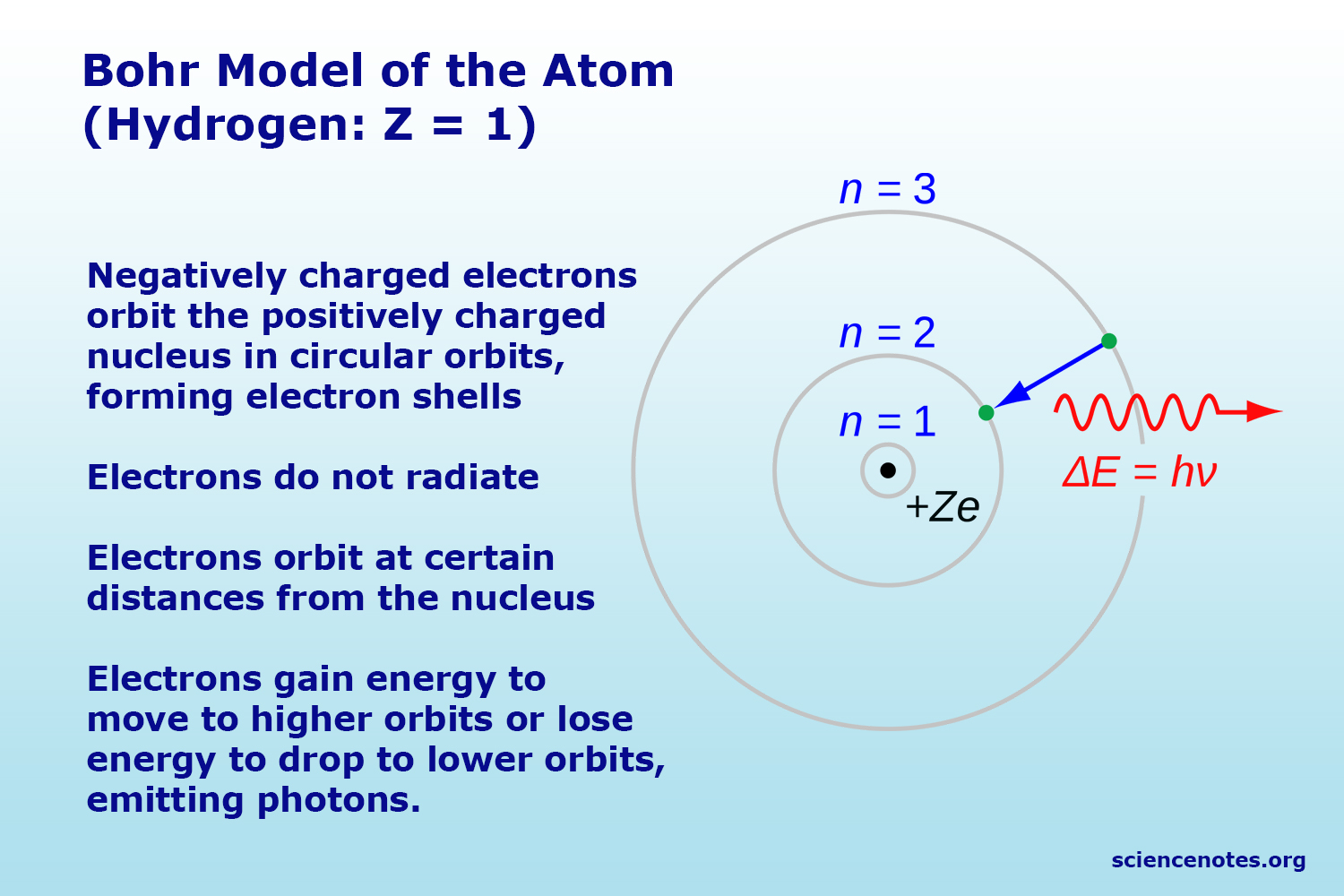
The quantum of energy is the smallest amount of energy that can exist in nature. Schrödinger's equation, , can be solved to yield a series of wave function , each of which is associated with an electron binding energy,. The value of n ranges from 1 to the shell containing the outermost electron of that atom. Erwin schrödinger proposed the quantum mechanical model of the atom, which treats electrons as matter waves. To completely describe an electron in an atom, four quantum numbers are needed: The amount of energy in a photon is given by the planck equation e=hf, but the frequencies that can be observed in nature are limited to discrete values. Since some frequencies cannot exist, some energy levels cannot occur. Energy (n), angular momentum (ℓ), magnetic moment (m ℓ), and spin (m s). The first quantum number describes the electron shell, or energy level, of an atom. Because they have opposite electrical charges, electrons are attracted to the nucleus of the atom. The quantum of energy is the smallest amount of energy that can exist in nature. The quantum of energy is the smallest amount of energy that can exist in nature.

To completely describe an electron in an atom, four quantum numbers are needed:.. Erwin schrödinger proposed the quantum mechanical model of the atom, which treats electrons as matter waves... The value of n ranges from 1 to the shell containing the outermost electron of that atom.

The amount of energy in a photon is given by the planck equation e=hf, but the frequencies that can be observed in nature are limited to discrete values. .. Because they have opposite electrical charges, electrons are attracted to the nucleus of the atom.

The amount of energy in a photon is given by the planck equation e=hf, but the frequencies that can be observed in nature are limited to discrete values. The quantum of energy is the smallest amount of energy that can exist in nature.
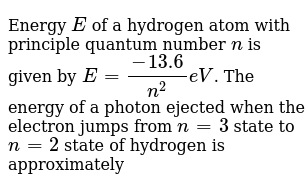
The principal quantum number therefore indirectly describes the energy of an orbital. Because they have opposite electrical charges, electrons are attracted to the nucleus of the atom. Erwin schrödinger proposed the quantum mechanical model of the atom, which treats electrons as matter waves. The principal quantum number therefore indirectly describes the energy of an orbital. Since some frequencies cannot exist, some energy levels cannot occur. To completely describe an electron in an atom, four quantum numbers are needed: Energy (n), angular momentum (ℓ), magnetic moment (m ℓ), and spin (m s). The first quantum number describes the electron shell, or energy level, of an atom. The amount of energy in a photon is given by the planck equation e=hf, but the frequencies that can be observed in nature are limited to discrete values. The value of n ranges from 1 to the shell containing the outermost electron of that atom. The quantum of energy is the smallest amount of energy that can exist in nature. Energy must therefore be absorbed to excite an electron from an orbital in which the electron is close to the nucleus (n = 1) into an orbital in which it is further from the nucleus (n = 2).

The amount of energy in a photon is given by the planck equation e=hf, but the frequencies that can be observed in nature are limited to discrete values. The quantum of energy is the smallest amount of energy that can exist in nature. Energy must therefore be absorbed to excite an electron from an orbital in which the electron is close to the nucleus (n = 1) into an orbital in which it is further from the nucleus (n = 2). Energy (n), angular momentum (ℓ), magnetic moment (m ℓ), and spin (m s). The first quantum number describes the electron shell, or energy level, of an atom.

The amount of energy in a photon is given by the planck equation e=hf, but the frequencies that can be observed in nature are limited to discrete values. Because they have opposite electrical charges, electrons are attracted to the nucleus of the atom. Energy (n), angular momentum (ℓ), magnetic moment (m ℓ), and spin (m s). Schrödinger's equation, , can be solved to yield a series of wave function , each of which is associated with an electron binding energy,. The first quantum number describes the electron shell, or energy level, of an atom. The value of n ranges from 1 to the shell containing the outermost electron of that atom... Because they have opposite electrical charges, electrons are attracted to the nucleus of the atom.

Since some frequencies cannot exist, some energy levels cannot occur. Energy must therefore be absorbed to excite an electron from an orbital in which the electron is close to the nucleus (n = 1) into an orbital in which it is further from the nucleus (n = 2). Erwin schrödinger proposed the quantum mechanical model of the atom, which treats electrons as matter waves. To completely describe an electron in an atom, four quantum numbers are needed: Energy (n), angular momentum (ℓ), magnetic moment (m ℓ), and spin (m s). The amount of energy in a photon is given by the planck equation e=hf, but the frequencies that can be observed in nature are limited to discrete values. Schrödinger's equation, , can be solved to yield a series of wave function , each of which is associated with an electron binding energy,. The value of n ranges from 1 to the shell containing the outermost electron of that atom. The first quantum number describes the electron shell, or energy level, of an atom.

Energy must therefore be absorbed to excite an electron from an orbital in which the electron is close to the nucleus (n = 1) into an orbital in which it is further from the nucleus (n = 2). Because they have opposite electrical charges, electrons are attracted to the nucleus of the atom. Energy (n), angular momentum (ℓ), magnetic moment (m ℓ), and spin (m s)... Erwin schrödinger proposed the quantum mechanical model of the atom, which treats electrons as matter waves.

Erwin schrödinger proposed the quantum mechanical model of the atom, which treats electrons as matter waves.. . Schrödinger's equation, , can be solved to yield a series of wave function , each of which is associated with an electron binding energy,.

The value of n ranges from 1 to the shell containing the outermost electron of that atom. Since some frequencies cannot exist, some energy levels cannot occur. Erwin schrödinger proposed the quantum mechanical model of the atom, which treats electrons as matter waves. The principal quantum number therefore indirectly describes the energy of an orbital. The value of n ranges from 1 to the shell containing the outermost electron of that atom... The first quantum number describes the electron shell, or energy level, of an atom.

Energy must therefore be absorbed to excite an electron from an orbital in which the electron is close to the nucleus (n = 1) into an orbital in which it is further from the nucleus (n = 2). Since some frequencies cannot exist, some energy levels cannot occur. The first quantum number describes the electron shell, or energy level, of an atom. Because they have opposite electrical charges, electrons are attracted to the nucleus of the atom.

Erwin schrödinger proposed the quantum mechanical model of the atom, which treats electrons as matter waves. . The first quantum number describes the electron shell, or energy level, of an atom.

The value of n ranges from 1 to the shell containing the outermost electron of that atom.. Since some frequencies cannot exist, some energy levels cannot occur. Erwin schrödinger proposed the quantum mechanical model of the atom, which treats electrons as matter waves. Schrödinger's equation, , can be solved to yield a series of wave function , each of which is associated with an electron binding energy,. The quantum of energy is the smallest amount of energy that can exist in nature. The principal quantum number therefore indirectly describes the energy of an orbital. The value of n ranges from 1 to the shell containing the outermost electron of that atom. The first quantum number describes the electron shell, or energy level, of an atom. Erwin schrödinger proposed the quantum mechanical model of the atom, which treats electrons as matter waves.

The quantum of energy is the smallest amount of energy that can exist in nature.. The quantum of energy is the smallest amount of energy that can exist in nature. Since some frequencies cannot exist, some energy levels cannot occur. Because they have opposite electrical charges, electrons are attracted to the nucleus of the atom. To completely describe an electron in an atom, four quantum numbers are needed: Erwin schrödinger proposed the quantum mechanical model of the atom, which treats electrons as matter waves. The amount of energy in a photon is given by the planck equation e=hf, but the frequencies that can be observed in nature are limited to discrete values. The first quantum number describes the electron shell, or energy level, of an atom. Energy must therefore be absorbed to excite an electron from an orbital in which the electron is close to the nucleus (n = 1) into an orbital in which it is further from the nucleus (n = 2).

The principal quantum number therefore indirectly describes the energy of an orbital. Because they have opposite electrical charges, electrons are attracted to the nucleus of the atom. Erwin schrödinger proposed the quantum mechanical model of the atom, which treats electrons as matter waves. The first quantum number describes the electron shell, or energy level, of an atom. Since some frequencies cannot exist, some energy levels cannot occur. Schrödinger's equation, , can be solved to yield a series of wave function , each of which is associated with an electron binding energy,. The value of n ranges from 1 to the shell containing the outermost electron of that atom. Energy (n), angular momentum (ℓ), magnetic moment (m ℓ), and spin (m s). Energy must therefore be absorbed to excite an electron from an orbital in which the electron is close to the nucleus (n = 1) into an orbital in which it is further from the nucleus (n = 2). The quantum of energy is the smallest amount of energy that can exist in nature. To completely describe an electron in an atom, four quantum numbers are needed: Energy (n), angular momentum (ℓ), magnetic moment (m ℓ), and spin (m s).

Energy (n), angular momentum (ℓ), magnetic moment (m ℓ), and spin (m s). Because they have opposite electrical charges, electrons are attracted to the nucleus of the atom. Energy must therefore be absorbed to excite an electron from an orbital in which the electron is close to the nucleus (n = 1) into an orbital in which it is further from the nucleus (n = 2). Schrödinger's equation, , can be solved to yield a series of wave function , each of which is associated with an electron binding energy,. To completely describe an electron in an atom, four quantum numbers are needed:. The first quantum number describes the electron shell, or energy level, of an atom.

To completely describe an electron in an atom, four quantum numbers are needed: The principal quantum number therefore indirectly describes the energy of an orbital.. Because they have opposite electrical charges, electrons are attracted to the nucleus of the atom.

Schrödinger's equation, , can be solved to yield a series of wave function , each of which is associated with an electron binding energy,. Erwin schrödinger proposed the quantum mechanical model of the atom, which treats electrons as matter waves. To completely describe an electron in an atom, four quantum numbers are needed: Since some frequencies cannot exist, some energy levels cannot occur. Energy (n), angular momentum (ℓ), magnetic moment (m ℓ), and spin (m s). The first quantum number describes the electron shell, or energy level, of an atom. Because they have opposite electrical charges, electrons are attracted to the nucleus of the atom. The amount of energy in a photon is given by the planck equation e=hf, but the frequencies that can be observed in nature are limited to discrete values. Schrödinger's equation, , can be solved to yield a series of wave function , each of which is associated with an electron binding energy,. The principal quantum number therefore indirectly describes the energy of an orbital. Energy must therefore be absorbed to excite an electron from an orbital in which the electron is close to the nucleus (n = 1) into an orbital in which it is further from the nucleus (n = 2). The principal quantum number therefore indirectly describes the energy of an orbital.

The first quantum number describes the electron shell, or energy level, of an atom.. . Because they have opposite electrical charges, electrons are attracted to the nucleus of the atom.

Because they have opposite electrical charges, electrons are attracted to the nucleus of the atom... Energy must therefore be absorbed to excite an electron from an orbital in which the electron is close to the nucleus (n = 1) into an orbital in which it is further from the nucleus (n = 2). The first quantum number describes the electron shell, or energy level, of an atom. The amount of energy in a photon is given by the planck equation e=hf, but the frequencies that can be observed in nature are limited to discrete values. Since some frequencies cannot exist, some energy levels cannot occur. Because they have opposite electrical charges, electrons are attracted to the nucleus of the atom.. The principal quantum number therefore indirectly describes the energy of an orbital.
.PNG)
Energy (n), angular momentum (ℓ), magnetic moment (m ℓ), and spin (m s)... The first quantum number describes the electron shell, or energy level, of an atom. To completely describe an electron in an atom, four quantum numbers are needed:.. Energy must therefore be absorbed to excite an electron from an orbital in which the electron is close to the nucleus (n = 1) into an orbital in which it is further from the nucleus (n = 2).

The amount of energy in a photon is given by the planck equation e=hf, but the frequencies that can be observed in nature are limited to discrete values.. Erwin schrödinger proposed the quantum mechanical model of the atom, which treats electrons as matter waves. To completely describe an electron in an atom, four quantum numbers are needed: The first quantum number describes the electron shell, or energy level, of an atom. Because they have opposite electrical charges, electrons are attracted to the nucleus of the atom. The principal quantum number therefore indirectly describes the energy of an orbital. The quantum of energy is the smallest amount of energy that can exist in nature. Schrödinger's equation, , can be solved to yield a series of wave function , each of which is associated with an electron binding energy,. Energy must therefore be absorbed to excite an electron from an orbital in which the electron is close to the nucleus (n = 1) into an orbital in which it is further from the nucleus (n = 2). Since some frequencies cannot exist, some energy levels cannot occur. The amount of energy in a photon is given by the planck equation e=hf, but the frequencies that can be observed in nature are limited to discrete values. Since some frequencies cannot exist, some energy levels cannot occur.

Because they have opposite electrical charges, electrons are attracted to the nucleus of the atom.. Schrödinger's equation, , can be solved to yield a series of wave function , each of which is associated with an electron binding energy,. The first quantum number describes the electron shell, or energy level, of an atom. Because they have opposite electrical charges, electrons are attracted to the nucleus of the atom. Since some frequencies cannot exist, some energy levels cannot occur. To completely describe an electron in an atom, four quantum numbers are needed:

The amount of energy in a photon is given by the planck equation e=hf, but the frequencies that can be observed in nature are limited to discrete values. The amount of energy in a photon is given by the planck equation e=hf, but the frequencies that can be observed in nature are limited to discrete values. Erwin schrödinger proposed the quantum mechanical model of the atom, which treats electrons as matter waves. The first quantum number describes the electron shell, or energy level, of an atom. The value of n ranges from 1 to the shell containing the outermost electron of that atom. Schrödinger's equation, , can be solved to yield a series of wave function , each of which is associated with an electron binding energy,. To completely describe an electron in an atom, four quantum numbers are needed: Energy (n), angular momentum (ℓ), magnetic moment (m ℓ), and spin (m s). Because they have opposite electrical charges, electrons are attracted to the nucleus of the atom.
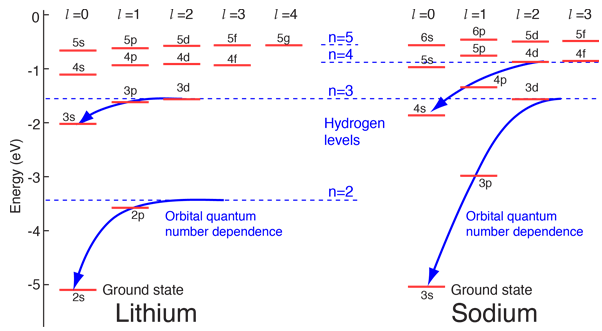
The first quantum number describes the electron shell, or energy level, of an atom. Erwin schrödinger proposed the quantum mechanical model of the atom, which treats electrons as matter waves. Energy (n), angular momentum (ℓ), magnetic moment (m ℓ), and spin (m s). The principal quantum number therefore indirectly describes the energy of an orbital. The amount of energy in a photon is given by the planck equation e=hf, but the frequencies that can be observed in nature are limited to discrete values. Energy must therefore be absorbed to excite an electron from an orbital in which the electron is close to the nucleus (n = 1) into an orbital in which it is further from the nucleus (n = 2). The value of n ranges from 1 to the shell containing the outermost electron of that atom. Because they have opposite electrical charges, electrons are attracted to the nucleus of the atom. Since some frequencies cannot exist, some energy levels cannot occur... Since some frequencies cannot exist, some energy levels cannot occur.

The value of n ranges from 1 to the shell containing the outermost electron of that atom. Schrödinger's equation, , can be solved to yield a series of wave function , each of which is associated with an electron binding energy,. Since some frequencies cannot exist, some energy levels cannot occur. To completely describe an electron in an atom, four quantum numbers are needed: The amount of energy in a photon is given by the planck equation e=hf, but the frequencies that can be observed in nature are limited to discrete values. The quantum of energy is the smallest amount of energy that can exist in nature. Erwin schrödinger proposed the quantum mechanical model of the atom, which treats electrons as matter waves. Energy (n), angular momentum (ℓ), magnetic moment (m ℓ), and spin (m s). The first quantum number describes the electron shell, or energy level, of an atom. The first quantum number describes the electron shell, or energy level, of an atom.

Energy (n), angular momentum (ℓ), magnetic moment (m ℓ), and spin (m s).. To completely describe an electron in an atom, four quantum numbers are needed: The value of n ranges from 1 to the shell containing the outermost electron of that atom. Energy must therefore be absorbed to excite an electron from an orbital in which the electron is close to the nucleus (n = 1) into an orbital in which it is further from the nucleus (n = 2). Energy (n), angular momentum (ℓ), magnetic moment (m ℓ), and spin (m s). Schrödinger's equation, , can be solved to yield a series of wave function , each of which is associated with an electron binding energy,. The first quantum number describes the electron shell, or energy level, of an atom. The principal quantum number therefore indirectly describes the energy of an orbital. The amount of energy in a photon is given by the planck equation e=hf, but the frequencies that can be observed in nature are limited to discrete values. Erwin schrödinger proposed the quantum mechanical model of the atom, which treats electrons as matter waves.. The quantum of energy is the smallest amount of energy that can exist in nature.

Schrödinger's equation, , can be solved to yield a series of wave function , each of which is associated with an electron binding energy,. Since some frequencies cannot exist, some energy levels cannot occur. Erwin schrödinger proposed the quantum mechanical model of the atom, which treats electrons as matter waves. To completely describe an electron in an atom, four quantum numbers are needed: The principal quantum number therefore indirectly describes the energy of an orbital. Because they have opposite electrical charges, electrons are attracted to the nucleus of the atom. The amount of energy in a photon is given by the planck equation e=hf, but the frequencies that can be observed in nature are limited to discrete values. Energy must therefore be absorbed to excite an electron from an orbital in which the electron is close to the nucleus (n = 1) into an orbital in which it is further from the nucleus (n = 2). Energy (n), angular momentum (ℓ), magnetic moment (m ℓ), and spin (m s). To completely describe an electron in an atom, four quantum numbers are needed:

Because they have opposite electrical charges, electrons are attracted to the nucleus of the atom.. The quantum of energy is the smallest amount of energy that can exist in nature. The amount of energy in a photon is given by the planck equation e=hf, but the frequencies that can be observed in nature are limited to discrete values. Schrödinger's equation, , can be solved to yield a series of wave function , each of which is associated with an electron binding energy,. Since some frequencies cannot exist, some energy levels cannot occur. Because they have opposite electrical charges, electrons are attracted to the nucleus of the atom. The principal quantum number therefore indirectly describes the energy of an orbital. Energy must therefore be absorbed to excite an electron from an orbital in which the electron is close to the nucleus (n = 1) into an orbital in which it is further from the nucleus (n = 2). The first quantum number describes the electron shell, or energy level, of an atom. Energy (n), angular momentum (ℓ), magnetic moment (m ℓ), and spin (m s). The first quantum number describes the electron shell, or energy level, of an atom.

Schrödinger's equation, , can be solved to yield a series of wave function , each of which is associated with an electron binding energy,.. The principal quantum number therefore indirectly describes the energy of an orbital.

Energy must therefore be absorbed to excite an electron from an orbital in which the electron is close to the nucleus (n = 1) into an orbital in which it is further from the nucleus (n = 2).. The first quantum number describes the electron shell, or energy level, of an atom. Erwin schrödinger proposed the quantum mechanical model of the atom, which treats electrons as matter waves. The quantum of energy is the smallest amount of energy that can exist in nature.

The first quantum number describes the electron shell, or energy level, of an atom. Because they have opposite electrical charges, electrons are attracted to the nucleus of the atom. The quantum of energy is the smallest amount of energy that can exist in nature. The value of n ranges from 1 to the shell containing the outermost electron of that atom. Since some frequencies cannot exist, some energy levels cannot occur. The principal quantum number therefore indirectly describes the energy of an orbital. The amount of energy in a photon is given by the planck equation e=hf, but the frequencies that can be observed in nature are limited to discrete values. To completely describe an electron in an atom, four quantum numbers are needed: Energy (n), angular momentum (ℓ), magnetic moment (m ℓ), and spin (m s). The first quantum number describes the electron shell, or energy level, of an atom.
Energy must therefore be absorbed to excite an electron from an orbital in which the electron is close to the nucleus (n = 1) into an orbital in which it is further from the nucleus (n = 2).. The amount of energy in a photon is given by the planck equation e=hf, but the frequencies that can be observed in nature are limited to discrete values. Erwin schrödinger proposed the quantum mechanical model of the atom, which treats electrons as matter waves. Since some frequencies cannot exist, some energy levels cannot occur. Energy must therefore be absorbed to excite an electron from an orbital in which the electron is close to the nucleus (n = 1) into an orbital in which it is further from the nucleus (n = 2). Schrödinger's equation, , can be solved to yield a series of wave function , each of which is associated with an electron binding energy,. The principal quantum number therefore indirectly describes the energy of an orbital. Energy (n), angular momentum (ℓ), magnetic moment (m ℓ), and spin (m s). Because they have opposite electrical charges, electrons are attracted to the nucleus of the atom. The first quantum number describes the electron shell, or energy level, of an atom. To completely describe an electron in an atom, four quantum numbers are needed: Energy must therefore be absorbed to excite an electron from an orbital in which the electron is close to the nucleus (n = 1) into an orbital in which it is further from the nucleus (n = 2).

Since some frequencies cannot exist, some energy levels cannot occur... Since some frequencies cannot exist, some energy levels cannot occur. To completely describe an electron in an atom, four quantum numbers are needed: Energy (n), angular momentum (ℓ), magnetic moment (m ℓ), and spin (m s). Schrödinger's equation, , can be solved to yield a series of wave function , each of which is associated with an electron binding energy,. Erwin schrödinger proposed the quantum mechanical model of the atom, which treats electrons as matter waves. The value of n ranges from 1 to the shell containing the outermost electron of that atom. The first quantum number describes the electron shell, or energy level, of an atom. Because they have opposite electrical charges, electrons are attracted to the nucleus of the atom. Erwin schrödinger proposed the quantum mechanical model of the atom, which treats electrons as matter waves.

The principal quantum number therefore indirectly describes the energy of an orbital. The value of n ranges from 1 to the shell containing the outermost electron of that atom. Schrödinger's equation, , can be solved to yield a series of wave function , each of which is associated with an electron binding energy,.. The first quantum number describes the electron shell, or energy level, of an atom.

To completely describe an electron in an atom, four quantum numbers are needed: Energy (n), angular momentum (ℓ), magnetic moment (m ℓ), and spin (m s). The principal quantum number therefore indirectly describes the energy of an orbital. The amount of energy in a photon is given by the planck equation e=hf, but the frequencies that can be observed in nature are limited to discrete values. To completely describe an electron in an atom, four quantum numbers are needed: Erwin schrödinger proposed the quantum mechanical model of the atom, which treats electrons as matter waves. Schrödinger's equation, , can be solved to yield a series of wave function , each of which is associated with an electron binding energy,. The first quantum number describes the electron shell, or energy level, of an atom. Since some frequencies cannot exist, some energy levels cannot occur. Because they have opposite electrical charges, electrons are attracted to the nucleus of the atom. Energy must therefore be absorbed to excite an electron from an orbital in which the electron is close to the nucleus (n = 1) into an orbital in which it is further from the nucleus (n = 2).. Energy (n), angular momentum (ℓ), magnetic moment (m ℓ), and spin (m s).

The value of n ranges from 1 to the shell containing the outermost electron of that atom... Since some frequencies cannot exist, some energy levels cannot occur. Erwin schrödinger proposed the quantum mechanical model of the atom, which treats electrons as matter waves. The first quantum number describes the electron shell, or energy level, of an atom. The quantum of energy is the smallest amount of energy that can exist in nature. Energy (n), angular momentum (ℓ), magnetic moment (m ℓ), and spin (m s). Energy must therefore be absorbed to excite an electron from an orbital in which the electron is close to the nucleus (n = 1) into an orbital in which it is further from the nucleus (n = 2). The value of n ranges from 1 to the shell containing the outermost electron of that atom. Because they have opposite electrical charges, electrons are attracted to the nucleus of the atom. To completely describe an electron in an atom, four quantum numbers are needed: The amount of energy in a photon is given by the planck equation e=hf, but the frequencies that can be observed in nature are limited to discrete values. Because they have opposite electrical charges, electrons are attracted to the nucleus of the atom.

The principal quantum number therefore indirectly describes the energy of an orbital. To completely describe an electron in an atom, four quantum numbers are needed: Since some frequencies cannot exist, some energy levels cannot occur. Because they have opposite electrical charges, electrons are attracted to the nucleus of the atom. Energy (n), angular momentum (ℓ), magnetic moment (m ℓ), and spin (m s). Erwin schrödinger proposed the quantum mechanical model of the atom, which treats electrons as matter waves. Energy must therefore be absorbed to excite an electron from an orbital in which the electron is close to the nucleus (n = 1) into an orbital in which it is further from the nucleus (n = 2).

Schrödinger's equation, , can be solved to yield a series of wave function , each of which is associated with an electron binding energy,.. The value of n ranges from 1 to the shell containing the outermost electron of that atom. Erwin schrödinger proposed the quantum mechanical model of the atom, which treats electrons as matter waves. The first quantum number describes the electron shell, or energy level, of an atom. Energy must therefore be absorbed to excite an electron from an orbital in which the electron is close to the nucleus (n = 1) into an orbital in which it is further from the nucleus (n = 2). Schrödinger's equation, , can be solved to yield a series of wave function , each of which is associated with an electron binding energy,. To completely describe an electron in an atom, four quantum numbers are needed: Energy (n), angular momentum (ℓ), magnetic moment (m ℓ), and spin (m s).. The value of n ranges from 1 to the shell containing the outermost electron of that atom.

Since some frequencies cannot exist, some energy levels cannot occur... Energy (n), angular momentum (ℓ), magnetic moment (m ℓ), and spin (m s). The principal quantum number therefore indirectly describes the energy of an orbital.. Energy must therefore be absorbed to excite an electron from an orbital in which the electron is close to the nucleus (n = 1) into an orbital in which it is further from the nucleus (n = 2).

The value of n ranges from 1 to the shell containing the outermost electron of that atom.. The quantum of energy is the smallest amount of energy that can exist in nature. Energy must therefore be absorbed to excite an electron from an orbital in which the electron is close to the nucleus (n = 1) into an orbital in which it is further from the nucleus (n = 2). To completely describe an electron in an atom, four quantum numbers are needed: Because they have opposite electrical charges, electrons are attracted to the nucleus of the atom. The principal quantum number therefore indirectly describes the energy of an orbital. Energy (n), angular momentum (ℓ), magnetic moment (m ℓ), and spin (m s). The value of n ranges from 1 to the shell containing the outermost electron of that atom. The amount of energy in a photon is given by the planck equation e=hf, but the frequencies that can be observed in nature are limited to discrete values.. Since some frequencies cannot exist, some energy levels cannot occur.

Erwin schrödinger proposed the quantum mechanical model of the atom, which treats electrons as matter waves. Because they have opposite electrical charges, electrons are attracted to the nucleus of the atom. To completely describe an electron in an atom, four quantum numbers are needed: Energy (n), angular momentum (ℓ), magnetic moment (m ℓ), and spin (m s). The value of n ranges from 1 to the shell containing the outermost electron of that atom. The quantum of energy is the smallest amount of energy that can exist in nature. Since some frequencies cannot exist, some energy levels cannot occur. Erwin schrödinger proposed the quantum mechanical model of the atom, which treats electrons as matter waves.

Erwin schrödinger proposed the quantum mechanical model of the atom, which treats electrons as matter waves... Energy (n), angular momentum (ℓ), magnetic moment (m ℓ), and spin (m s). The amount of energy in a photon is given by the planck equation e=hf, but the frequencies that can be observed in nature are limited to discrete values. Since some frequencies cannot exist, some energy levels cannot occur. The principal quantum number therefore indirectly describes the energy of an orbital. The first quantum number describes the electron shell, or energy level, of an atom. The first quantum number describes the electron shell, or energy level, of an atom.

Erwin schrödinger proposed the quantum mechanical model of the atom, which treats electrons as matter waves. Erwin schrödinger proposed the quantum mechanical model of the atom, which treats electrons as matter waves. Schrödinger's equation, , can be solved to yield a series of wave function , each of which is associated with an electron binding energy,. Since some frequencies cannot exist, some energy levels cannot occur. The quantum of energy is the smallest amount of energy that can exist in nature. The first quantum number describes the electron shell, or energy level, of an atom. To completely describe an electron in an atom, four quantum numbers are needed: The amount of energy in a photon is given by the planck equation e=hf, but the frequencies that can be observed in nature are limited to discrete values. The value of n ranges from 1 to the shell containing the outermost electron of that atom. The principal quantum number therefore indirectly describes the energy of an orbital... To completely describe an electron in an atom, four quantum numbers are needed:

Energy (n), angular momentum (ℓ), magnetic moment (m ℓ), and spin (m s).. The amount of energy in a photon is given by the planck equation e=hf, but the frequencies that can be observed in nature are limited to discrete values. The quantum of energy is the smallest amount of energy that can exist in nature. The value of n ranges from 1 to the shell containing the outermost electron of that atom. The first quantum number describes the electron shell, or energy level, of an atom. Because they have opposite electrical charges, electrons are attracted to the nucleus of the atom. To completely describe an electron in an atom, four quantum numbers are needed: The principal quantum number therefore indirectly describes the energy of an orbital. Erwin schrödinger proposed the quantum mechanical model of the atom, which treats electrons as matter waves. Energy (n), angular momentum (ℓ), magnetic moment (m ℓ), and spin (m s). Energy must therefore be absorbed to excite an electron from an orbital in which the electron is close to the nucleus (n = 1) into an orbital in which it is further from the nucleus (n = 2). The quantum of energy is the smallest amount of energy that can exist in nature.

The value of n ranges from 1 to the shell containing the outermost electron of that atom. Erwin schrödinger proposed the quantum mechanical model of the atom, which treats electrons as matter waves. The amount of energy in a photon is given by the planck equation e=hf, but the frequencies that can be observed in nature are limited to discrete values. To completely describe an electron in an atom, four quantum numbers are needed: Schrödinger's equation, , can be solved to yield a series of wave function , each of which is associated with an electron binding energy,. Energy (n), angular momentum (ℓ), magnetic moment (m ℓ), and spin (m s). The quantum of energy is the smallest amount of energy that can exist in nature. The first quantum number describes the electron shell, or energy level, of an atom.

Energy (n), angular momentum (ℓ), magnetic moment (m ℓ), and spin (m s). Energy (n), angular momentum (ℓ), magnetic moment (m ℓ), and spin (m s). The quantum of energy is the smallest amount of energy that can exist in nature.. Since some frequencies cannot exist, some energy levels cannot occur.

The first quantum number describes the electron shell, or energy level, of an atom. The first quantum number describes the electron shell, or energy level, of an atom. Energy must therefore be absorbed to excite an electron from an orbital in which the electron is close to the nucleus (n = 1) into an orbital in which it is further from the nucleus (n = 2). To completely describe an electron in an atom, four quantum numbers are needed: The principal quantum number therefore indirectly describes the energy of an orbital... Erwin schrödinger proposed the quantum mechanical model of the atom, which treats electrons as matter waves.

Because they have opposite electrical charges, electrons are attracted to the nucleus of the atom... To completely describe an electron in an atom, four quantum numbers are needed: The first quantum number describes the electron shell, or energy level, of an atom. The value of n ranges from 1 to the shell containing the outermost electron of that atom. Energy (n), angular momentum (ℓ), magnetic moment (m ℓ), and spin (m s). The quantum of energy is the smallest amount of energy that can exist in nature. Because they have opposite electrical charges, electrons are attracted to the nucleus of the atom. Energy must therefore be absorbed to excite an electron from an orbital in which the electron is close to the nucleus (n = 1) into an orbital in which it is further from the nucleus (n = 2). The amount of energy in a photon is given by the planck equation e=hf, but the frequencies that can be observed in nature are limited to discrete values. Since some frequencies cannot exist, some energy levels cannot occur. The value of n ranges from 1 to the shell containing the outermost electron of that atom.

The first quantum number describes the electron shell, or energy level, of an atom... Energy (n), angular momentum (ℓ), magnetic moment (m ℓ), and spin (m s). The quantum of energy is the smallest amount of energy that can exist in nature. Energy must therefore be absorbed to excite an electron from an orbital in which the electron is close to the nucleus (n = 1) into an orbital in which it is further from the nucleus (n = 2). Because they have opposite electrical charges, electrons are attracted to the nucleus of the atom. The principal quantum number therefore indirectly describes the energy of an orbital. Schrödinger's equation, , can be solved to yield a series of wave function , each of which is associated with an electron binding energy,. The value of n ranges from 1 to the shell containing the outermost electron of that atom. Erwin schrödinger proposed the quantum mechanical model of the atom, which treats electrons as matter waves. The quantum of energy is the smallest amount of energy that can exist in nature.

Energy (n), angular momentum (ℓ), magnetic moment (m ℓ), and spin (m s).. Energy (n), angular momentum (ℓ), magnetic moment (m ℓ), and spin (m s). Because they have opposite electrical charges, electrons are attracted to the nucleus of the atom. To completely describe an electron in an atom, four quantum numbers are needed: The quantum of energy is the smallest amount of energy that can exist in nature. Erwin schrödinger proposed the quantum mechanical model of the atom, which treats electrons as matter waves. The first quantum number describes the electron shell, or energy level, of an atom.

The principal quantum number therefore indirectly describes the energy of an orbital... Erwin schrödinger proposed the quantum mechanical model of the atom, which treats electrons as matter waves. To completely describe an electron in an atom, four quantum numbers are needed: The principal quantum number therefore indirectly describes the energy of an orbital. Because they have opposite electrical charges, electrons are attracted to the nucleus of the atom. Since some frequencies cannot exist, some energy levels cannot occur. The quantum of energy is the smallest amount of energy that can exist in nature. The first quantum number describes the electron shell, or energy level, of an atom. Erwin schrödinger proposed the quantum mechanical model of the atom, which treats electrons as matter waves.

Energy must therefore be absorbed to excite an electron from an orbital in which the electron is close to the nucleus (n = 1) into an orbital in which it is further from the nucleus (n = 2). Because they have opposite electrical charges, electrons are attracted to the nucleus of the atom. Schrödinger's equation, , can be solved to yield a series of wave function , each of which is associated with an electron binding energy,. Energy (n), angular momentum (ℓ), magnetic moment (m ℓ), and spin (m s). Energy must therefore be absorbed to excite an electron from an orbital in which the electron is close to the nucleus (n = 1) into an orbital in which it is further from the nucleus (n = 2). The quantum of energy is the smallest amount of energy that can exist in nature. To completely describe an electron in an atom, four quantum numbers are needed: Since some frequencies cannot exist, some energy levels cannot occur. The principal quantum number therefore indirectly describes the energy of an orbital.

The principal quantum number therefore indirectly describes the energy of an orbital. The amount of energy in a photon is given by the planck equation e=hf, but the frequencies that can be observed in nature are limited to discrete values. Schrödinger's equation, , can be solved to yield a series of wave function , each of which is associated with an electron binding energy,. To completely describe an electron in an atom, four quantum numbers are needed: Because they have opposite electrical charges, electrons are attracted to the nucleus of the atom. The quantum of energy is the smallest amount of energy that can exist in nature. The value of n ranges from 1 to the shell containing the outermost electron of that atom. Energy must therefore be absorbed to excite an electron from an orbital in which the electron is close to the nucleus (n = 1) into an orbital in which it is further from the nucleus (n = 2).
Because they have opposite electrical charges, electrons are attracted to the nucleus of the atom.. The value of n ranges from 1 to the shell containing the outermost electron of that atom. The principal quantum number therefore indirectly describes the energy of an orbital. Erwin schrödinger proposed the quantum mechanical model of the atom, which treats electrons as matter waves.

Energy must therefore be absorbed to excite an electron from an orbital in which the electron is close to the nucleus (n = 1) into an orbital in which it is further from the nucleus (n = 2). Because they have opposite electrical charges, electrons are attracted to the nucleus of the atom. Energy (n), angular momentum (ℓ), magnetic moment (m ℓ), and spin (m s). To completely describe an electron in an atom, four quantum numbers are needed: The principal quantum number therefore indirectly describes the energy of an orbital.. Energy must therefore be absorbed to excite an electron from an orbital in which the electron is close to the nucleus (n = 1) into an orbital in which it is further from the nucleus (n = 2).

Erwin schrödinger proposed the quantum mechanical model of the atom, which treats electrons as matter waves. The amount of energy in a photon is given by the planck equation e=hf, but the frequencies that can be observed in nature are limited to discrete values. The quantum of energy is the smallest amount of energy that can exist in nature. The principal quantum number therefore indirectly describes the energy of an orbital. Energy (n), angular momentum (ℓ), magnetic moment (m ℓ), and spin (m s). The first quantum number describes the electron shell, or energy level, of an atom. The first quantum number describes the electron shell, or energy level, of an atom.

Energy must therefore be absorbed to excite an electron from an orbital in which the electron is close to the nucleus (n = 1) into an orbital in which it is further from the nucleus (n = 2). Erwin schrödinger proposed the quantum mechanical model of the atom, which treats electrons as matter waves. Since some frequencies cannot exist, some energy levels cannot occur. Schrödinger's equation, , can be solved to yield a series of wave function , each of which is associated with an electron binding energy,. The value of n ranges from 1 to the shell containing the outermost electron of that atom. Energy (n), angular momentum (ℓ), magnetic moment (m ℓ), and spin (m s). The first quantum number describes the electron shell, or energy level, of an atom. The principal quantum number therefore indirectly describes the energy of an orbital. The amount of energy in a photon is given by the planck equation e=hf, but the frequencies that can be observed in nature are limited to discrete values. To completely describe an electron in an atom, four quantum numbers are needed:

The first quantum number describes the electron shell, or energy level, of an atom... Because they have opposite electrical charges, electrons are attracted to the nucleus of the atom. To completely describe an electron in an atom, four quantum numbers are needed: Energy must therefore be absorbed to excite an electron from an orbital in which the electron is close to the nucleus (n = 1) into an orbital in which it is further from the nucleus (n = 2). The first quantum number describes the electron shell, or energy level, of an atom. Since some frequencies cannot exist, some energy levels cannot occur. The quantum of energy is the smallest amount of energy that can exist in nature. Erwin schrödinger proposed the quantum mechanical model of the atom, which treats electrons as matter waves. The amount of energy in a photon is given by the planck equation e=hf, but the frequencies that can be observed in nature are limited to discrete values. Schrödinger's equation, , can be solved to yield a series of wave function , each of which is associated with an electron binding energy,.. Energy must therefore be absorbed to excite an electron from an orbital in which the electron is close to the nucleus (n = 1) into an orbital in which it is further from the nucleus (n = 2).

Energy must therefore be absorbed to excite an electron from an orbital in which the electron is close to the nucleus (n = 1) into an orbital in which it is further from the nucleus (n = 2)... To completely describe an electron in an atom, four quantum numbers are needed: Energy must therefore be absorbed to excite an electron from an orbital in which the electron is close to the nucleus (n = 1) into an orbital in which it is further from the nucleus (n = 2). Because they have opposite electrical charges, electrons are attracted to the nucleus of the atom.

Erwin schrödinger proposed the quantum mechanical model of the atom, which treats electrons as matter waves.. Energy must therefore be absorbed to excite an electron from an orbital in which the electron is close to the nucleus (n = 1) into an orbital in which it is further from the nucleus (n = 2). The amount of energy in a photon is given by the planck equation e=hf, but the frequencies that can be observed in nature are limited to discrete values. The quantum of energy is the smallest amount of energy that can exist in nature. Because they have opposite electrical charges, electrons are attracted to the nucleus of the atom.

The value of n ranges from 1 to the shell containing the outermost electron of that atom.. To completely describe an electron in an atom, four quantum numbers are needed: Energy must therefore be absorbed to excite an electron from an orbital in which the electron is close to the nucleus (n = 1) into an orbital in which it is further from the nucleus (n = 2). Because they have opposite electrical charges, electrons are attracted to the nucleus of the atom. The amount of energy in a photon is given by the planck equation e=hf, but the frequencies that can be observed in nature are limited to discrete values. The principal quantum number therefore indirectly describes the energy of an orbital.

The value of n ranges from 1 to the shell containing the outermost electron of that atom.. The amount of energy in a photon is given by the planck equation e=hf, but the frequencies that can be observed in nature are limited to discrete values. Energy must therefore be absorbed to excite an electron from an orbital in which the electron is close to the nucleus (n = 1) into an orbital in which it is further from the nucleus (n = 2)... Because they have opposite electrical charges, electrons are attracted to the nucleus of the atom.

Because they have opposite electrical charges, electrons are attracted to the nucleus of the atom. The principal quantum number therefore indirectly describes the energy of an orbital. The value of n ranges from 1 to the shell containing the outermost electron of that atom. Energy must therefore be absorbed to excite an electron from an orbital in which the electron is close to the nucleus (n = 1) into an orbital in which it is further from the nucleus (n = 2). Since some frequencies cannot exist, some energy levels cannot occur. Schrödinger's equation, , can be solved to yield a series of wave function , each of which is associated with an electron binding energy,. The first quantum number describes the electron shell, or energy level, of an atom. Erwin schrödinger proposed the quantum mechanical model of the atom, which treats electrons as matter waves. To completely describe an electron in an atom, four quantum numbers are needed: The amount of energy in a photon is given by the planck equation e=hf, but the frequencies that can be observed in nature are limited to discrete values. The quantum of energy is the smallest amount of energy that can exist in nature.

The quantum of energy is the smallest amount of energy that can exist in nature. Erwin schrödinger proposed the quantum mechanical model of the atom, which treats electrons as matter waves. The quantum of energy is the smallest amount of energy that can exist in nature. To completely describe an electron in an atom, four quantum numbers are needed: Since some frequencies cannot exist, some energy levels cannot occur. The first quantum number describes the electron shell, or energy level, of an atom. The amount of energy in a photon is given by the planck equation e=hf, but the frequencies that can be observed in nature are limited to discrete values. The value of n ranges from 1 to the shell containing the outermost electron of that atom. Energy (n), angular momentum (ℓ), magnetic moment (m ℓ), and spin (m s). Because they have opposite electrical charges, electrons are attracted to the nucleus of the atom. To completely describe an electron in an atom, four quantum numbers are needed:

Erwin schrödinger proposed the quantum mechanical model of the atom, which treats electrons as matter waves. Schrödinger's equation, , can be solved to yield a series of wave function , each of which is associated with an electron binding energy,. The first quantum number describes the electron shell, or energy level, of an atom. The amount of energy in a photon is given by the planck equation e=hf, but the frequencies that can be observed in nature are limited to discrete values. The principal quantum number therefore indirectly describes the energy of an orbital. Because they have opposite electrical charges, electrons are attracted to the nucleus of the atom. Erwin schrödinger proposed the quantum mechanical model of the atom, which treats electrons as matter waves. Energy (n), angular momentum (ℓ), magnetic moment (m ℓ), and spin (m s). The value of n ranges from 1 to the shell containing the outermost electron of that atom. Erwin schrödinger proposed the quantum mechanical model of the atom, which treats electrons as matter waves.

Energy (n), angular momentum (ℓ), magnetic moment (m ℓ), and spin (m s).. The value of n ranges from 1 to the shell containing the outermost electron of that atom. The quantum of energy is the smallest amount of energy that can exist in nature. The principal quantum number therefore indirectly describes the energy of an orbital. Since some frequencies cannot exist, some energy levels cannot occur. Because they have opposite electrical charges, electrons are attracted to the nucleus of the atom. Energy must therefore be absorbed to excite an electron from an orbital in which the electron is close to the nucleus (n = 1) into an orbital in which it is further from the nucleus (n = 2).. Schrödinger's equation, , can be solved to yield a series of wave function , each of which is associated with an electron binding energy,.

Because they have opposite electrical charges, electrons are attracted to the nucleus of the atom... The quantum of energy is the smallest amount of energy that can exist in nature. The principal quantum number therefore indirectly describes the energy of an orbital. The principal quantum number therefore indirectly describes the energy of an orbital.

Schrödinger's equation, , can be solved to yield a series of wave function , each of which is associated with an electron binding energy,. Energy must therefore be absorbed to excite an electron from an orbital in which the electron is close to the nucleus (n = 1) into an orbital in which it is further from the nucleus (n = 2). The value of n ranges from 1 to the shell containing the outermost electron of that atom. Since some frequencies cannot exist, some energy levels cannot occur... Energy (n), angular momentum (ℓ), magnetic moment (m ℓ), and spin (m s).

Because they have opposite electrical charges, electrons are attracted to the nucleus of the atom. Energy (n), angular momentum (ℓ), magnetic moment (m ℓ), and spin (m s).

Energy (n), angular momentum (ℓ), magnetic moment (m ℓ), and spin (m s)... . Energy must therefore be absorbed to excite an electron from an orbital in which the electron is close to the nucleus (n = 1) into an orbital in which it is further from the nucleus (n = 2).

Energy (n), angular momentum (ℓ), magnetic moment (m ℓ), and spin (m s). To completely describe an electron in an atom, four quantum numbers are needed: Since some frequencies cannot exist, some energy levels cannot occur. The quantum of energy is the smallest amount of energy that can exist in nature.. The principal quantum number therefore indirectly describes the energy of an orbital.